
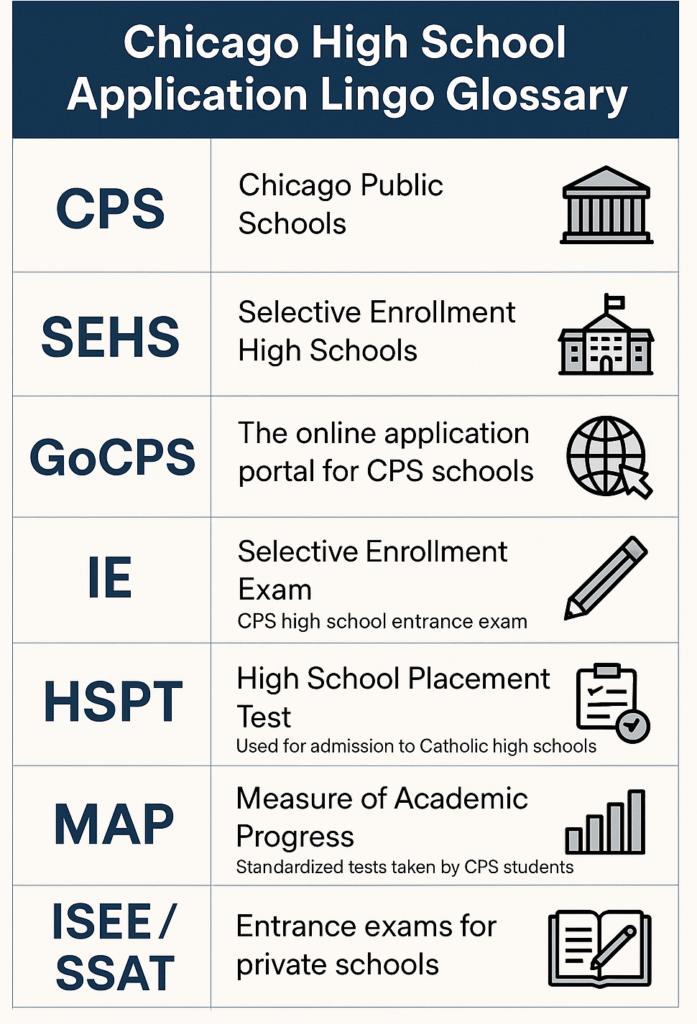
If you’re a parent or teen navigating the Chicago High School application process, you may feel like you’ve stepped into a world with its own secret language: “SEHS,” “Catholic test,” “GoCPS,” “Tier 4.” Chicago’s high school application process can be dizzying, stressful, and packed with acronyms. Here’s a primer to help you understand what your adolescent clients (or your own family) are talking about, and why this process feels so overwhelming.
Public vs. Private vs. Catholic Schools
Public (Neighborhood) Schools
-
Every student in Chicago has a guaranteed neighborhood high school based on their address.
-
Some families choose their neighborhood school; others aim for selective programs elsewhere.
Selective Enrollment Public Schools (SEHS)
-
The crown jewels of CPS (Chicago Public Schools). Examples: Walter Payton, Northside College Prep, Jones, Whitney Young.
-
Admission is based on test scores, grades, and a competitive points system. These schools are often ranked nationally.
Private Schools
-
Independent schools such as Latin School of Chicago, Parker or University of Chicago Lab Schools.
-
Families apply directly, often requiring essays, interviews, and entrance exams like the ISEE or SSAT.
Catholic Schools
-
A popular option, especially with large networks like DePaul College Prep, St. Ignatius, and Loyola Academy.
-
Admission typically requires the High School Placement Test (HSPT) or the newer Pre-ACT 8/9.
Decoding the Exams
-
Selective Enrollment Exam (CPS): The big one for SEHS, covering reading, math, vocabulary, and logic.
-
NWEA MAP Test: Scores from 7th grade MAP exams count heavily in selective enrollment admissions.
-
Catholic/Private School Exams: HSPT, Pre-ACT 8/9, or ISEE/SSAT depending on the school.
For many 7th and 8th graders, this means juggling multiple standardized tests in one year—on top of school grades, essays, and interviews.
Why the Stress?
-
High Stakes: Admission to a “top” school is seen as a golden ticket to college and career success.
-
Competition: Thousands of students apply for limited seats in selective schools.
-
Confusing Process: Each track (public selective, private, Catholic) has its own deadlines, criteria, and portals.
-
Family & Peer Pressure: Teens often feel their worth is tied to getting into a certain school.
-
Tiers & Equity: CPS uses a socioeconomic tier system to balance admissions. Decoding how this affects your points adds another layer of confusion.
The Schools Teens Talk About Most
Selective Enrollment: Walter Payton, Northside, Whitney Young, Jones, Lane Tech.
Private: Latin, Lab Schools, Francis W. Parker.
Catholic: St. Ignatius, Loyola Academy, DePaul College Prep, Marist.
Neighborhood “Choice” Schools: Lane Tech (also SEHS), Lincoln Park High School IB program, Von Steuben Scholars.
These names carry weight in teen conversations. When a client says, “I didn’t get into Lane, I’m stuck at Lincoln Park,” clinicians unfamiliar with the landscape may not understand the intensity of those feelings.
How to Support Teens Moving Through Highschool Application Process
-
Validate the Stress: Don’t minimize. For Chicago teens, this process feels like the “college admissions” of middle school.
-
Decode Together: Ask them to explain the lingo—it can be empowering for teens to teach you.
-
Reframe Success: Remind students that thriving is less about the name of the school and more about fit, support, and engagement.
-
Normalize Multiple Paths: Many successful adults did not attend the “top” schools.
Final Takeaway
For adolescents in Chicago, the high school application process is a defining experience—full of exams, acronyms, and intense competition. By understanding the basic structures and language of this system, clinicians and parents can better validate teens’ stress and help them feel less alone in the process.
