
Starting an SSRI can bring up almost as much anxiety as the symptoms you’re trying to treat.
You finally take a step toward feeling better… and your brain immediately jumps in with:
- “What if this changes who I am?”
- “What if I get stuck on this forever?”
- “What if I feel worse?”

Let’s separate what’s actually true from what anxiety is telling you.
What SSRIs Actually Do

SSRIs (like sertraline, fluoxetine, escitalopram) help increase available serotonin in the brain. Over time, this helps regulate mood, anxiety, and reactivity.
They don’t work instantly.
- 1–2 weeks: subtle shifts
- 4–6 weeks: more noticeable improvement
- 8+ weeks: full effect (especially for anxiety and OCD)
This timeline matters more than people think.
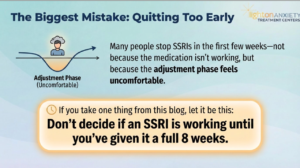

Quitting Too Early
Many people stop SSRIs in the first few weeks—not because the medication isn’t working, but because the adjustment phase feels uncomfortable.
If you take one thing from this blog, let it be this:
Don’t decide if an SSRI is working until you’ve given it a full 8 weeks.
Common Fears
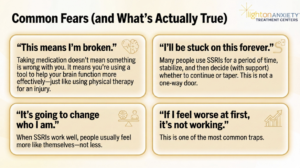

“This means I’m broken.”
Taking medication doesn’t mean something is wrong with you. It means you’re using a tool to help your brain function more effectively—just like using physical therapy for an injury.
“I’ll be stuck on this forever.”
Many people use SSRIs for a period of time, stabilize, and then decide (with support) whether to continue or taper. This is not a one-way door.
“It’s going to change who I am.”
When SSRIs work well, people usually feel more like themselves—not less.
“If I feel worse at first, it’s not working.”
This is one of the most common traps.
Activation Is Simply Excitement With A Different Interpretation

Early on, SSRIs can create what we call activation:
- Jitteriness
- Increased anxiety
- Sleep changes
Your brain may interpret this as danger.
But it’s not dangerous—it’s your system adjusting.
It’s the same body response you feel before a first date or stepping onto a rollercoaster. In those moments, you might call it excitement.
Here, your brain calls it anxiety.
Same physiology. Different story.
You Are In Charge of Your Treatment Decisions, Not Anxiety!

This is the most important mindset shift.
The part of your brain that’s anxious will try to convince you to stop:
- “This is too much”
- “This isn’t right for me”
- “I need relief now”
But anxiety is wired for short-term escape, not long-term change.
If you let anxiety decide, it will almost always choose to stop too soon.
Instead, stay the course long enough for your non-anxious brain to weigh in.
Because once your anxiety decreases, your thoughts about the medication often change too.
Top Tips for Successful Medication Trial

1. Commit to the full trial
Give it 8 weeks before evaluating (unless your prescriber advises otherwise).
2. Be consistent
Take it at the same time daily. Missed doses slow progress.
3. Support your body
- Take with food
- Limit caffeine
- Stay hydrated
4. Protect your routine
- Keep sleep/wake times steady
- Gentle exercise helps regulate your system
5. Expect the adjustment phase
Don’t be caught off guard by early discomfort—it’s part of the process.
6. Use a CBT lens
When symptoms spike, try:
- “This is activation, not danger”
- “I can handle this discomfort”
- “I don’t need to act on this feeling”
The Bottom Line
SSRIs don’t flip a switch—they retrain your brain over time.
The early phase can feel uncomfortable, but that discomfort is often where people accidentally step off right before things start to improve.
If you can stay steady, not let anxiety take over the narrative, and give the medication a real chance to work, you open the door to a very different experience—one where your fears no longer get to run the show.
